
Rainy February Days and a Gut-Friendly Discovery
Updated: Feb 20
The week of February 9th to 15th was one of those full, rain-soaked weeks where everything seems to happen at once.
Between dog walks, cat visits, and Peanut and Lentil’s appointments and activities, the days blurred together in a swirl of waterproofs, packed snacks and calendar reminders.
We had outings to Epsom Playhouse and Ashford Hospital, each filling the diary a little more. With so much going on, there was hardly time left to see friends or get back to Pilates — something I really notice when life gets too tightly scheduled.
And yet, amidst the rush, one quiet morning stood out.
I made myself a bowl of warm buckwheat porridge — simple, grounding, nourishing. The kind of breakfast that feels like an exhale.
That same day, we tested a new recipe shared by my friend “Blueberry,” who is steadily evolving into quite the research assistant — thoughtful, thorough and delightfully detail-oriented.
Her dish? A barley bowl with roasted vegetables and baba ganoush.
Nutritionally speaking — a winner.
Barley brings beta-glucan fibre and resistant starch potential. Roasted vegetables contribute polyphenols and diverse plant fibres. Baba ganoush adds fibre, healthy fats and antioxidant compounds from aubergine.
It was hearty, deeply satisfying, and exactly the sort of meal that supports both blood sugar balance and gut health — without feeling clinical or complicated.
🌾 Barley Spotlight
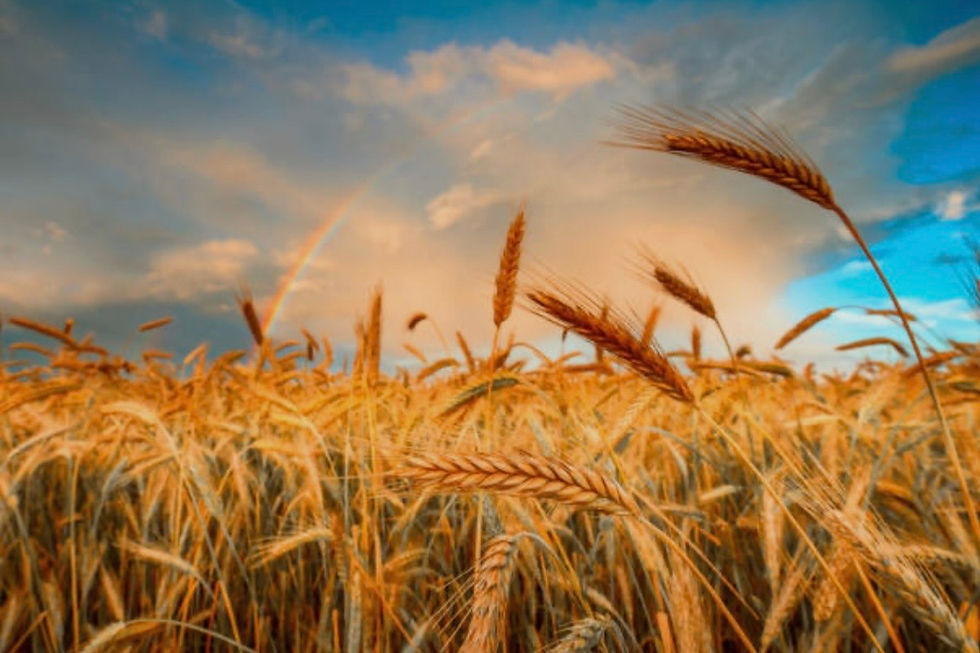
Barley is one of the oldest cultivated grains in the world — among the first crops ever domesticated — and today it is grown in over 100 countries.
It belongs to the grass family, and each head is formed by neat rows of seeds (six-row barley being the most common). Historically, it even fuelled Roman gladiators, who were reportedly nicknamed Hordearii — “barley men” — because their grain-rich diet was believed to support stamina and strength.
With its light nuttiness and gentle chew, barley sits somewhere between brown rice and oatmeal in texture. It works beautifully in both savoury and sweet dishes — from soups and stews to porridges and even puddings.
Nutritionally, barley is impressive:
Rich in both soluble and insoluble fibre
A source of beta-glucan (also found in oats), known to help maintain healthy cholesterol levels
Provides minerals such as selenium, magnesium and phosphorus
Slows glucose absorption, supporting steadier blood sugar
The most common form available is pearl barley, which has had its outer husk and bran removed. Whole barley retains more fibre and works particularly well for sprouting. Soaking (ideally 6–8 hours) can improve mineral bioavailability and shorten cooking time.
And if you toast barley before cooking, it develops a deeper, almost buttery flavour. Leftover toasted barley can even be brewed into barley tea — a comforting drink enjoyed in parts of Asia.
Source: Adapted from 26 Grains by Alex Hely-Hutchinson, a cookbook full of wholesome grain recipes from breakfast porridges to hearty dinners.
I suspect barley may deserve a blog post of its own.
Recently, Blueberry also sent me an insightful article from the The Washington Post about resistant starch — and that’s where things became even more interesting.
🌾 Why Resistant Starch Matters
Resistant starch is a type of carbohydrate that behaves more like fibre than traditional starch.
Instead of being rapidly broken down in the small intestine — like white bread or sugary cereals — it resists digestion and travels intact to the large intestine.
There, it becomes fuel for our beneficial gut bacteria.
As these bacteria ferment resistant starch, they produce short-chain fatty acids (including butyrate), which have been shown to:
Support the integrity of the gut lining
Reduce inflammation
Improve insulin sensitivity and blood sugar control
Lower LDL cholesterol
Increase satiety
Potentially reduce the risk of chronic diseases such as type 2 diabetes and cardiovascular disease
Research suggests that around 15g per day may offer meaningful benefits, yet typical UK intakes are thought to be much lower — often closer to 3–5g.
It’s one of those quiet nutritional gaps that rarely makes headlines.
🥦 Where to Find It (and How to Increase It)
Resistant starch occurs naturally in:
Beans, lentils and peas
Green (unripe) bananas
Potatoes
Some whole grains
Nuts and seeds
But here’s the part I love sharing with clients: you can increase resistant starch in certain foods simply by cooking and then cooling them.
This process — called retrogradation — changes the structure of the starch, making it less digestible and more supportive for gut bacteria and blood sugar balance.
For example:
Cooked and cooled rice contains more resistant starch than freshly made rice
Chilled or reheated pasta (yes, even chickpea pasta) can significantly increase its resistant starch content
Overnight oats are naturally gut-friendly thanks to soaking and cooling
Suddenly leftovers feel less like an afterthought and more like metabolic support.
🌿 Fibre Is a Team Effort
While resistant starch is powerful, it’s only one part of the wider fibre picture.
The 30g daily fibre recommendation from the National Health Service isn’t about focusing on one specific type. It’s about variety.
Different fibres play different roles:
Insoluble fibre supports bowel regularity
Soluble fibre helps regulate cholesterol and blood sugar
Fermentable fibres, including resistant starch, nourish our gut microbiome
No single fibre can do everything. But together, they create resilience.
This is why I encourage families — including my own little household of Peanut and Lentil — to think less about perfection and more about diversity.
Rotate grains. Include legumes. Cool leftovers now and then. Add nuts, seeds, vegetables and herbs.
Layer small habits over time.
Nutrition rarely needs to be dramatic. It just needs to be consistent.
February may have been grey and hurried, but it reminded me that even in busy weeks, nourishment can be quietly powerful.
A bowl of buckwheat. A barley tray bake with roasted vegetables and baba ganoush. A little curiosity sparked by a thoughtful friend.
I’ll be exploring grain diversity more deeply soon — particularly the role of ancient grains in modern kitchens. But that’s a conversation for after next week’s workshop.
For now, I’ll keep cooling my leftovers and calling it gut care.


Comments